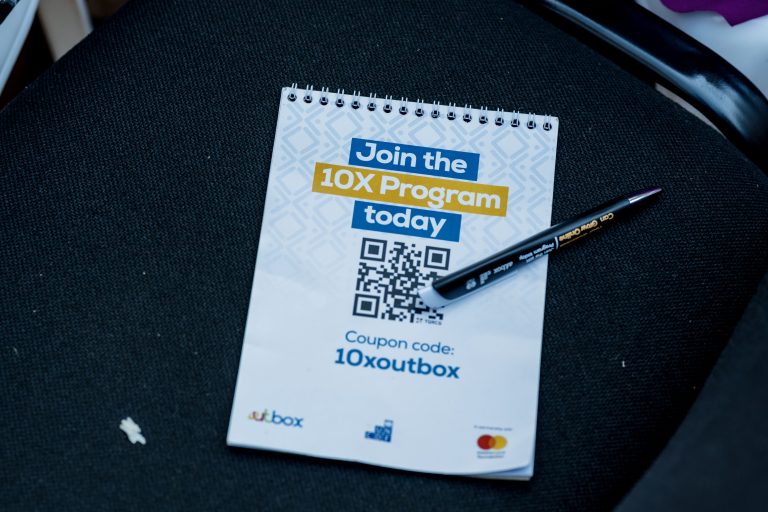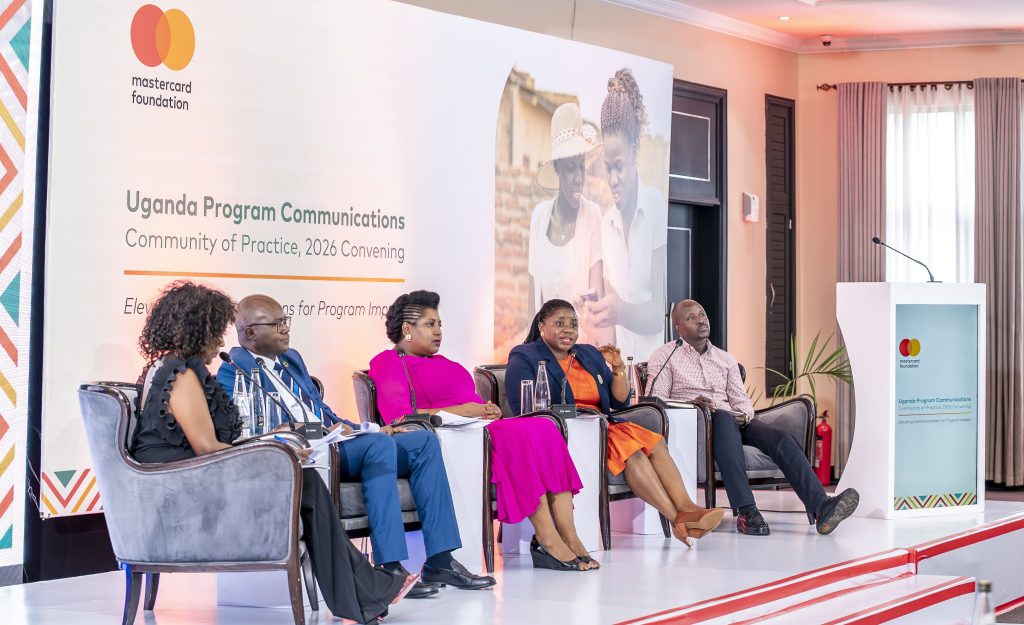
On 22nd and 23rd September 2026, I joined communications professionals working on Young Africa Works programs in Uganda at the Mastercard Foundation Communications Community of Practice annual convening. I attended on behalf of Outbox, which implements the 10X Program: Enabling the Growth of MSMEs through the Digital Economy, in partnership with UNCDF, Refactory and Women in Technology Uganda (WITU). The two days sharpened a question for our team: how can communications help us learn from implementation and make better program decisions?
1. Communications should be treated as a learning function, not just a reporting function.
The panel discussion, “Positioning Program Communications for Strategic Contribution: What Needs to Change?”, offered an important starting point. Irene Nakasiita, President of the Public Relations Association of Uganda, urged communicators to ground their work in evidence and turn figures and outcomes into stories that show both progress and what remains to be done. This reinforced the role of communications not only in documenting results, but also in helping teams understand what implementation is revealing.
A common challenge is that impact stories can focus heavily on the outcome while giving less attention to a participant’s starting point, the barriers she faced and the support she may still need. This limits the usefulness of stories for program learning and adaptive decision-making. For the 10X Program, a strong impact story should help us understand where a participant started, which digital tools she adopted, what changed and what challenges remain.
What this means for the 10X Program is that we need to adopt a common story brief that captures the participant’s starting point, barriers, digital tools adopted, experienced change, evidence and remaining support needs, discuss in detail the patterns emerging from stories and campaigns during program planning so that communications insights can inform implementation, and gather learning throughout implementation rather than waiting until an activity has ended.
2. Strong stories depend on verified evidence and closer collaboration across teams.
For communications insights to influence decisions, communicators need both credible evidence and strong working relationships. Sarah Kagingo, Founder of SoftPower Communications and former President of the Public Relations Association of Uganda, spoke about leadership through service and relationship building. This was re-emphasized a submission from Davis Rwabu, Lecturer in Communication Skills at Makerere University, around practical, and collaborative learning, while Michael Wangusa, Communications Officer at the United Nations Resident Coordinator’s Office in Uganda, highlighted the importance of using evidence from implementation results to inform wider conversations.
This is particularly relevant to the 10X Program because communications teams may receive requests for impact stories after activities have been completed. At that point, it can be difficult to reconstruct baseline information, verify changes or distinguish participant testimony from program evidence. Without early collaboration between Communications, Program and Results Measurement teams, stories may be compelling but less useful as evidence of contribution.
In order to effectively capture the impact the program has had upon a participant, the communications team will going forward, plan story collection with Program and Results Measurement teams early enough to identify the evidence that should be captured, verify quantitative and qualitative claims before publication, clearly distinguish participant-reported experiences from results supported by program data, and use verified stories to connect individual experiences to wider implementation learning.
3. Responsible Artificial Intelligence (AI) use and participant data protection are part of credible communications.
A separate discussion at the convening raised questions about the accuracy of AI-assisted content and the privacy of information entrusted to communications teams. It also brought into focus the digital safety of young people encouraged to participate in the digital economy. The 10X Program has introduced young women to cybersecurity topics, while Outbox has internal practices for responsible AI use. Both efforts reinforce the trust on which credible communications depend.
The practical challenge is that AI tools can make drafting and content production faster but using them without sufficient review can introduce inaccuracies or expose confidential participant information. This matters particularly when communications work includes personal stories, business information, photographs and other participant data.
While embracing the use of Artificial Intelligence and integrating aspects of it into our work, we shall review and verify all AI-assisted content before publication, not enter confidential or personally identifiable participant information into AI tools without appropriate safeguards, continue to obtain informed consent and represent participants respectfully, and apply the same digital-safety principles promoted to program participants within communications workflows.
4. Storytelling should show both progress and the barriers that remain.
One of the strongest ideas I am carrying forward is that a useful impact story should do more than demonstrate success. It should help the program understand the participant journey: the initial challenge, the intervention or digital tool adopted, the change experienced and the barriers that may still limit progress.
For the 10X Program, documenting only positive outcomes can leave important implementation questions unanswered. A participant may have increased sales through WhatsApp or TikTok, for example, while still facing challenges such as limited device access, digital confidence or financing. Capturing both dimensions makes stories more useful to teams deciding what support should come next.
Going forward, we shall use the participant journey as the basic structure for impact stories: starting point, barrier, digital tool or support, change, evidence, and remaining barrier. Treat recurring barriers across stories as implementation insights that should be shared with relevant teams and align story-gathering approaches with implementation partners so learning can travel across the 10X Program consistently and safely.
The key Lessons for the 10X Program Communications teams include using communications as a tool for learning and adaptive management, not only for reporting, verify stories and claims using program evidence, building stronger collaboration between Communications, Program and Results Measurement teams, applying responsible AI practices and protect participant data, and using storytelling to identify both progress and remaining barriers.
I left the convening with a clearer view of communications as a continuing cycle: listen, verify, share what we learn and use it to improve the work. For the 10X Program, strengthening that cycle can make communications more useful not only to external audiences, but also to the teams making decisions about how the program is implemented.